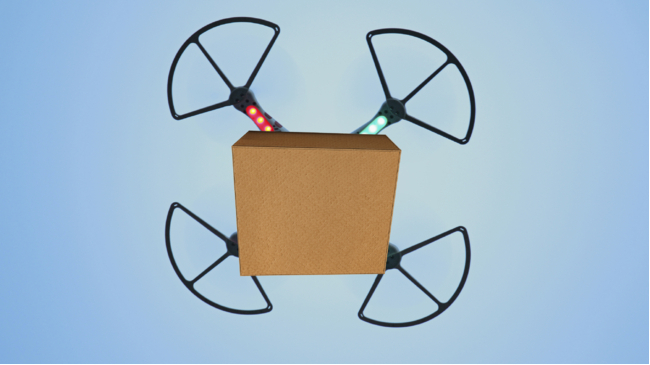
Drones were frequently in the news this week; DHL announced it had made 130 successful drone deliveries, UPS started delivering vaccinations and medicines in hard-to-reach areas and at Schiphol Airport, a drone almost collided with a KLM plane. The latest news caused a stir. After all, what does the rise of drones mean for air safety? Do drones have the future or are they too dangerous?
An increasing number of drones have been spotted around Schiphol Airport recently. NRC writes that in the past three months, pilots often reported drones moving very close to a runway or aircraft. On 1 April, for instance, pilots of three landing planes spotted another drone, forcing the temporary closure of the Zwanenburg runway. The drone spotted last Friday would have been just 30 metres from the aircraft, despite the wide no fly zone around Schiphol Airport. According to the Dutch Airline Pilots Association (VNV), it is therefore a matter of time before the first fatal collision between a drone and a commercial aircraft occurs.
According to NRC, the aviation industry is calling for action from politicians. Politicians are reluctant to do so because drones offer opportunities for transport and logistics, as well as for inspecting infrastructure, buildings or land. In addition, the drones can be used in emergencies.
The dangers are mainly in the regulations for amateur pilots. This is also confirmed by state secretary Sharon Dijksma (Infrastructure and Environment) and VNV to NRC. They do not need papers, while companies deploying drones have to pay around 12,000 euros for an accredited training course, a certificate of airworthiness and a certificate. So for logistics companies, the regulations are much stricter, which means the dangers are also smaller.
To further reduce accidents, drone pilots and the aviation industry are calling for improvements in the technical limitations in drones. For instance, drones equipped with software and GPS that make it impossible to take off in certain locations are being experimented with, so it is expected that the rules will be relaxed once drones become more reliable, which could also make it a lot more interesting (and affordable) for companies in transport and logistics to deploy drones.
Editorial LogistiekProfs
Source: NRC
Stay up to date
Sign up for the newsletter and receive the latest news, trends, innovations and developments from the sector.











