Which trends will define logistics in 2018? According to the ING Economic Bureau, the sector is keeping up the pace in 2018. The bank predicts growth of 3.5 per cent. LogistiekProfs ' regular experts also cast a glance into their crystal ball.
'End of forklift certificate?' Tom from BLOM: 'More safety in the warehouse can only be achieved by investing in people. This is the main lesson that the winners of the Safest Warehouse gave everyone during Logistica in November. Investing in people also means that, as a company, you need to get the material handling operators in a learning mode. Is taking competency tests, 1-hour certifications and self-assessment enough to get drivers into learning mode? Does this actually teach the drivers something or is the forklift certificate obtained just paper proof of working on (pretend) safety. Do we all accept this or do we abolish the forklift certificate and link drivers to profiles? These profiles give employers more clarity on who they are hiring and drivers it challenges to start learning to add value to the profile.'
'We are going to do more with data'  'The insight is really starting to sink in now: we have a lot of data in logistics and we can get a lot more value out of it,' says logistics journalist Marcel te Lindert. 'At European, national and regional level, many initiatives have been launched in recent years to stimulate the 'datafication' of the logistics sector. The standards and agreement systems that are under development - think iShare, TransFollow and the OpenTripModel - are starting to reach maturity and are now getting the attention of the tech suppliers who need to adopt them. Logistics companies are also increasingly understanding that they can make money from data, although it is far from clear how.
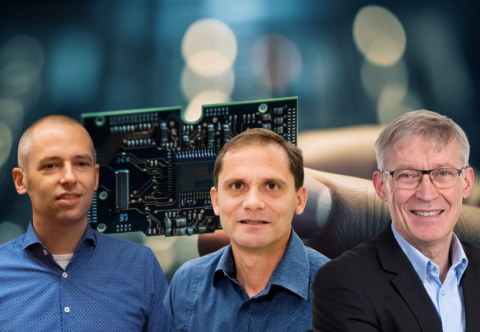
I expect to see more and more innovative and surprising data-based applications in 2018. Applications created by combining data from different systems, from different links in the chain and from different sources - think weather information, demographic or macroeconomic figures. Those applications will not only allow us to operate even more efficiently, but also to develop new data-driven products and services and possibly even new business models, whether or not combined with blockchain concepts. I can't wait to discover them.'
'Frameworks within which decisions were previously made are shifting'

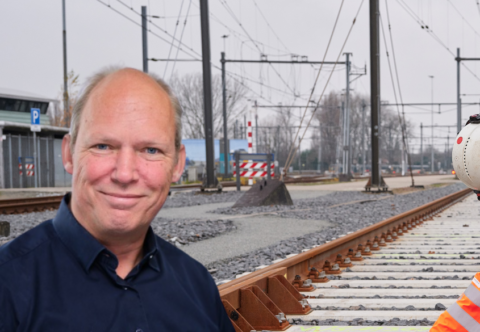
Frits de Wind: 'I expect a number of trends to be upon us in 2018. In the transport market, there is scarcity in (well-trained) staff, in transport equipment and load carriers. As long as the economy is growing, the scarcity will only get worse, and staff who have been let go turn out not to be easy to win back.
Companies also note that frameworks within which decisions were previously made are shifting. Therefore, choices (for outsourcing, moving production to low-wage countries, producing locally or centrally) need to be reviewed.
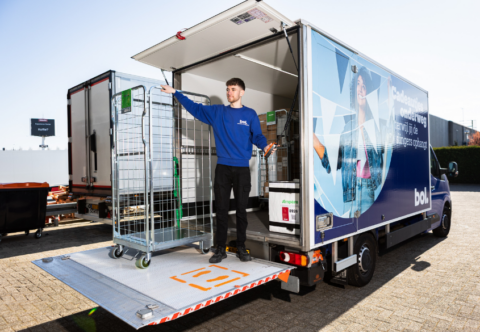
Scalability, agility and flexibility will also become even more important. Partly as a result of the popularity of online shops, companies have to constantly look for the balance between decreasing shipment sizes and the required efficiency.'
'Learning to deal with variations in your production and supply chain'

'Due to the increasing unique demands of consumers, the supply chain is differentiating but the product and process complexity is also increasing,' predicts Hans Groen. 'To still control costs, many organisations have embraced Lean and Six Sigma to standardise their processes. At some point, they run into the problem that highly complex products/processes are difficult to standardise.
Quick Response Management is a philosophy developed 20 years ago by Prof Rayan Suri. His philosophy picks up where Lean-Six Sigma leaves off. Accept variations in your processes where they are of strategic differentiation.
Internally, it's about reducing internal lead times on the shop floor and in the office so that internal responsiveness can be increased. Externally,it's about responding faster and more effectively to customer queries and communicating smarter with suppliers so that products can be designed and delivered faster based on customer-specific requests.
'Reducing Manufacturing Critical-path Time is the next phase in the maturity of organisations to cope with cost pressures on the one hand and increasing unique customer demand on the other .'