The shortage of logistics staff, both in the warehouse and on the road, is becoming increasingly acute. Companies active in storage, transport and distribution have little choice but to use the available people and resources even more efficiently. New, smart solutions are available for this. That is what the trade fair ICT & Logistiek will show on Wednesday 7 and Thursday 8 November.
At the end of 2017, the Netherlands had almost 7,000 vacancies for truck drivers, according to the Transport and Logistics Sector Institute. This year, that number will rise further as another 8,000 drivers retire. The influx of new drivers is simply too low to make up for the outflow, meaning the sector needs to find 2,000 new drivers every year.
Figures from the Transport and Logistics Sector Institute show that 28 per cent of transport companies are hampered in their operations due to labour market problems. This summer, that was one of the reasons why some petrol stations ran out of fuel. The Association Eigen Rijders Nederland recently warned of empty shop shelves. Some logistics service providers have to refuse new customers because drivers are lacking to carry out the work. They can free up capacity by better forecasting transport demand, scheduling existing trucks more efficiently and seizing all opportunities to bundle freight flows and increase load factors.
Feedback and gamification
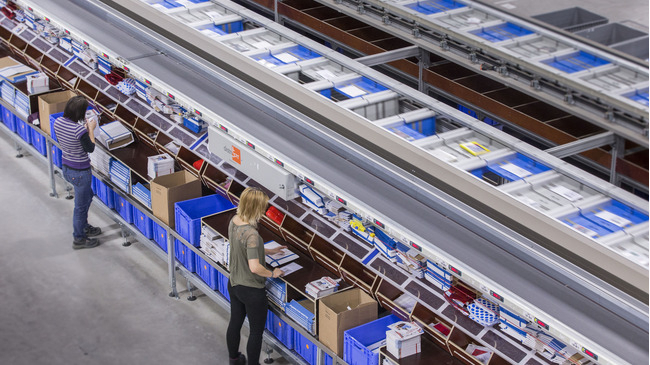
The logistics sector is facing a shortage not only of truck drivers, but also of warehouse workers and planners. Especially in North Brabant, North Limburg and around Utrecht, it is difficult to find good forklift drivers and order pickers. This calls for smart solutions to use the few available people and resources more efficiently and increase productivity. Smart solutions in planning, but also in managing people. There is also a growing need for solutions that improve ergonomics, safety and employee satisfaction, so that employees are retained for the company.
Prof René de Koster is convinced that logistics companies are missing out on opportunities to increase productivity. "An incentive such as a financial reward can help increase order pickers' productivity. But a recent experiment shows that performance is much better if each order picker receives feedback on his performance in addition to an incentive: does he score better or worse than average? If we introduce a piece of gamification - a list of high scores - performance is another 20 per cent higher," says the professor of logistics & operations at Erasmus University Rotterdam, who adds that further research needs to show whether the benefit of gamification holds up in the longer term.
Milkrun instead of wavepicking
Order picking is the most labour-intensive process in the warehouse. Smart concepts can improve performance in this area too. De Koster cites e-commerce warehouses with many small orders and high order picking density as examples. "One way to collect orders is the 'milkrun' concept: an employee goes out with a cart, collects items and immediately sorts them by order. If, during his walk around, a new order comes in for an item he has not yet passed, he takes it immediately. Research shows that this approach leads to great results and short lead times, but in practice it is still rarely used," says De Koster, who adds that the warehouse management system (WMS) must be able to support such concepts. "With a WMS set up purely for wavepicking, this does not work."
De Koster will give a presentation on the use of robotisation in the warehouse during ICT & Logistiek itself. "The staff shortage is one of the factors driving the developments of robotisation. Take as an example the deployment of order picker trucks that drive independently with the order picker. Several warehouse truck manufacturers offer solutions in that area. This leads to higher efficiency, for example if that order picker truck takes away full load carriers independently and the order picker can continue with empty load carriers brought in by another truck. But also consider the possibility of zone picking, where each order picker covers his own area and the order picker truck then proceeds independently to the order picker in the next zone. We are now analysing the measurements from a study into these kinds of applications. We will present those conclusions during ICT & Logistics."
Need for flexible WMS
De Koster expects warehouses to have to dynamically switch between different concepts in the future. Perhaps on a busy day zone picking will lead to the best performance, but on a quiet day it is better to let order pickers handle a complete order with their order pick truck. "That requires a WMS that has the ability to adjust shop floor controls quickly and flexibly. But also for people in the warehouse who can translate changes in the environment into adjustments in the controls. A logistics manager once told me that appointing a software engineer was the best decision he ever made. That software engineer was able to get the most out of all the logistics systems. Maybe more companies should do that."
ICT & Logistics
Today's digital transformation offers the logistics sector unprecedented opportunities. Through connections between suppliers, customers, people and systems, processes are realised and optimised. That is why on 7 and 8 November, trade fair ICT & Logistiek will be all about Connected Logistics. You can register for the fair here.