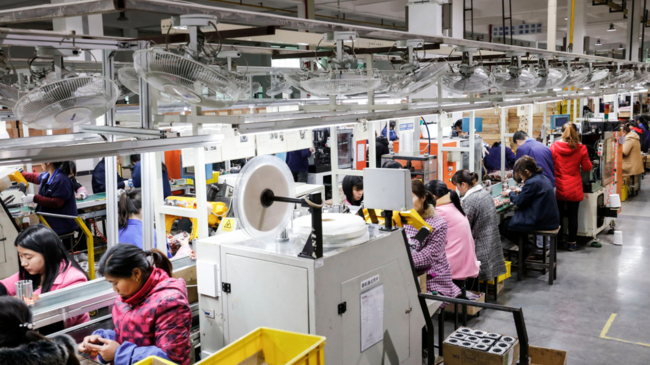
A third of supply chain executives are considering moving some of their sourcing and manufacturing operations away from China. It is not just COVID-19 that has caused that shift; even well before the coronavirus outbreak, highly globalised supply chains were under pressure.
Gartner research among 260 global supply chains (conducted in February and March) shows that 33 per cent of respondents have moved manufacturing operations out of China or plan to do so in the next three years. The results show that the pandemic is just one of the disruptions supply chains have faced in recent years.
Rising tariffs
The move out of China is partly driven by rising tariffs imposed by US and Chinese governments. For instance, 40 per cent of respondents saw supply chain costs rise by more than 10 per cent. "For just over a quarter of respondents, that cost increase was even greater," explains Kamala Ramen, senior researcher at Gartner. "Popular alternative locations are Vietnam, India and Mexico."
Resilient supply chain
Companies are also diverting to other countries to make their supply chains more resilient. Ramen: "Already in 2018 and 2019, the US-China trade war challenged the logic of highly outsourced, concentrated and interdependent networks. As a result, a new focus on supply chain resilience and the idea of more regional manufacturing emerged." Figures show that the margin between companies planning to add jobs in China and take them away had already narrowed significantly in 2019.
Resilience versus operational efficiency
Only 21 per cent of respondents say they currently have a highly resilient network. 55 per cent of respondents expect to have a highly resilient network in the next two to three years. However, resilience comes at a price. 58 per cent of respondents agree that more resilience also leads to additional structural costs, as more players and more complexity are added to the network. "To find the balance between efficiency and resilience, supply chains need to determine how they quantify potential risks against other supply chain objectives, such as cost effectiveness."
Closer to the customer
A quarter of participants say they have already (partly) arranged production regionally or locally, in order to be closer to the end customer. Ramen: "Many western organisations will have to explore new forms of automation on the production floor to reduce near- or onshoring costs. Some companies also prefer partial offshoring: manufacturing in Asia and final assembly close to home."
Logistic Platform Roosendaal: 'Make room for manufacturing'
Voices are also rising in the Netherlands for more players in the manufacturing industry to reduce dependence on China and curb transport movements. The Logistic Platform Roosendaal earlier this month called for the arrival of the manufacturing industry in Brabant.
Image: humphery / Shutterstock.com











