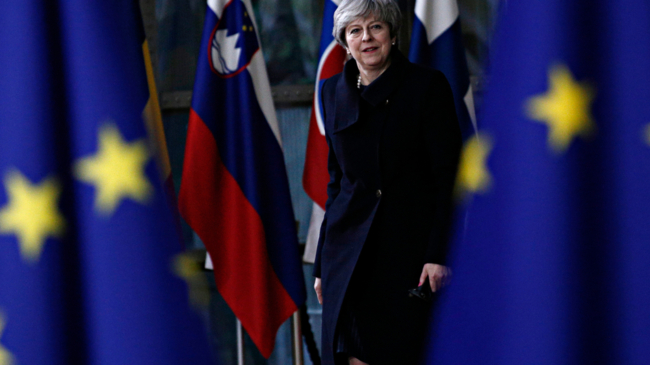
The UK parliament will vote on the brexit deal on Tuesday. As many parliamentarians disagree with the draft agreement, a rejection of the deal is likely. What then are the consequences for Dutch business? And for the transport and logistics sector?
In a report, ABN Amro highlights the consequences of a disorderly brexit for Dutch businesses. If the UK parliament rejects the brexit deal on 15 January, the chances of a no deal increase: the UK will then leave the European Union without agreements on the movement of goods, services and people.
Consequences for Dutch business
This could be negative for Dutch businesses. ABN Amro expects a 0.5 per cent lower GDP growth for the Netherlands this year in case of a no deal. The UK is the third export market for the Netherlands after Germany and Belgium. Conversely, the Netherlands is the fourth export market for the British. For Dutch importers of goods produced in the UK, one adverse consequence of a disorderly brexit is that product liability shifts to the importer, as the UK producer is no longer based in the EU. Exporters will have to deal with two customs authorities: besides the Dutch one, the British one.
Companies that do not trade directly with the UK are also going to feel the effects through, for example, longer delivery times and higher prices of goods.
Transport and logistics most vulnerable in no deal
According to ABN Amro, the transport and logistics sector is the most vulnerable in the event of a no deal. Transport companies, which now only need two or three documents to export to the UK, face a lot of red tape. That will become at least seven documents in a hard brexit. Moreover, border controls introduced in a no deal will create additional waiting times. An average ferry has 5.5 kilometres of lorries, 300 passenger cars and 1,200 passengers. The queues that can be created are a major risk for shippers of perishable goods and for just-in-time deliveries.
Other scenarios: orderly brexit and bremain
It is also possible that the UK parliament will still approve the brexit deal against expectations. The UK will then leave the European Union on 29 March, but there will be a transition period until 31 December 2020, during which time businesses and other organisations will have time to prepare for new rules that will apply after 31 December 2020. In that case, there will still be free movement for goods, services and people until 31 December 2020. An 'orderly brexit' has no adverse effects on Dutch GDP growth in the short term, ABN Amro expects.
A bremain is also possible, if the UK government revokes the exit or if, despite a deal, the UK fails to reach new agreements on the movement of goods, services and people during the transition period. In these cases, EU rules continue to apply in the UK. The bank does not expect this scenario to have any effects on Dutch GDP growth.
Prime Minister May already stated on Monday that brexit is off the table if her deal is not approved. She considers a bremain more likely than a hard brexit (no deal).
Image: Alexandros Michailidis / Shutterstock.com











